
Chicken Brine Recipe for Grilling – Simple, Juicy, and Flavorful
A great grilled chicken starts long before it hits the grates. Brining gives you juicy meat, crisp skin, and balanced seasoning without guesswork. This simple chicken brine recipe is easy to mix, uses pantry staples, and works for everything from thighs to a whole bird.
If you’ve ever had dry, bland chicken, this fixes it. You’ll get reliable results and better flavor, even if your grilling skills are still a work in progress.
What Makes This Special
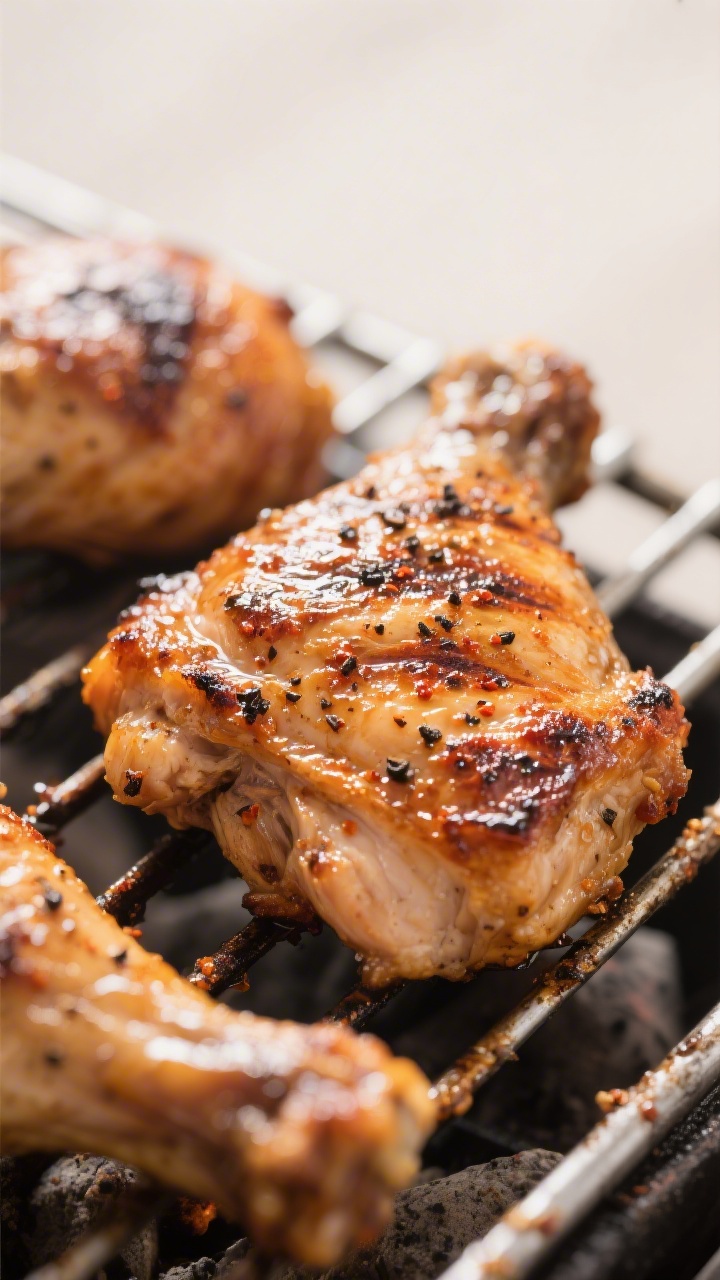
This brine leans on salt and sugar to lock in moisture and promote browning. A few aromatics add clean flavor without overpowering the chicken.
It’s also flexible: use it for bone-in pieces, boneless breasts, or a spatchcocked whole chicken. The salt level is set for safety and taste, so you won’t end up with a salty bird. Plus, you can make it ahead and keep it in the fridge.
Shopping List
- Kosher salt (Diamond Crystal preferred; see notes in FAQs)
- Brown sugar (light or dark) or white sugar
- Water (cold, plus some hot for dissolving)
- Garlic (4–6 cloves, smashed)
- Black peppercorns (1 tablespoon)
- Bay leaves (2–3)
- Lemon (1, sliced) or 2 tablespoons apple cider vinegar
- Fresh herbs like thyme or rosemary (a few sprigs; optional)
- Ice (to chill the brine quickly)
- Chicken (2–4 pounds of pieces or 1 whole chicken, spatchcocked if grilling)
Instructions
- Make a quick concentrate: In a large pot, combine 2 cups hot water, 1/3 cup kosher salt (Diamond Crystal) and 3 tablespoons brown sugar.
Stir until fully dissolved. If using Morton kosher salt, use 1/4 cup instead. Add peppercorns, bay leaves, garlic, and lemon slices.
- Top up with cold water and ice: Add 4 cups cold water and 2 cups ice to bring the brine to about 2 quarts total and cool it quickly.
The brine should be fully cold before adding chicken.
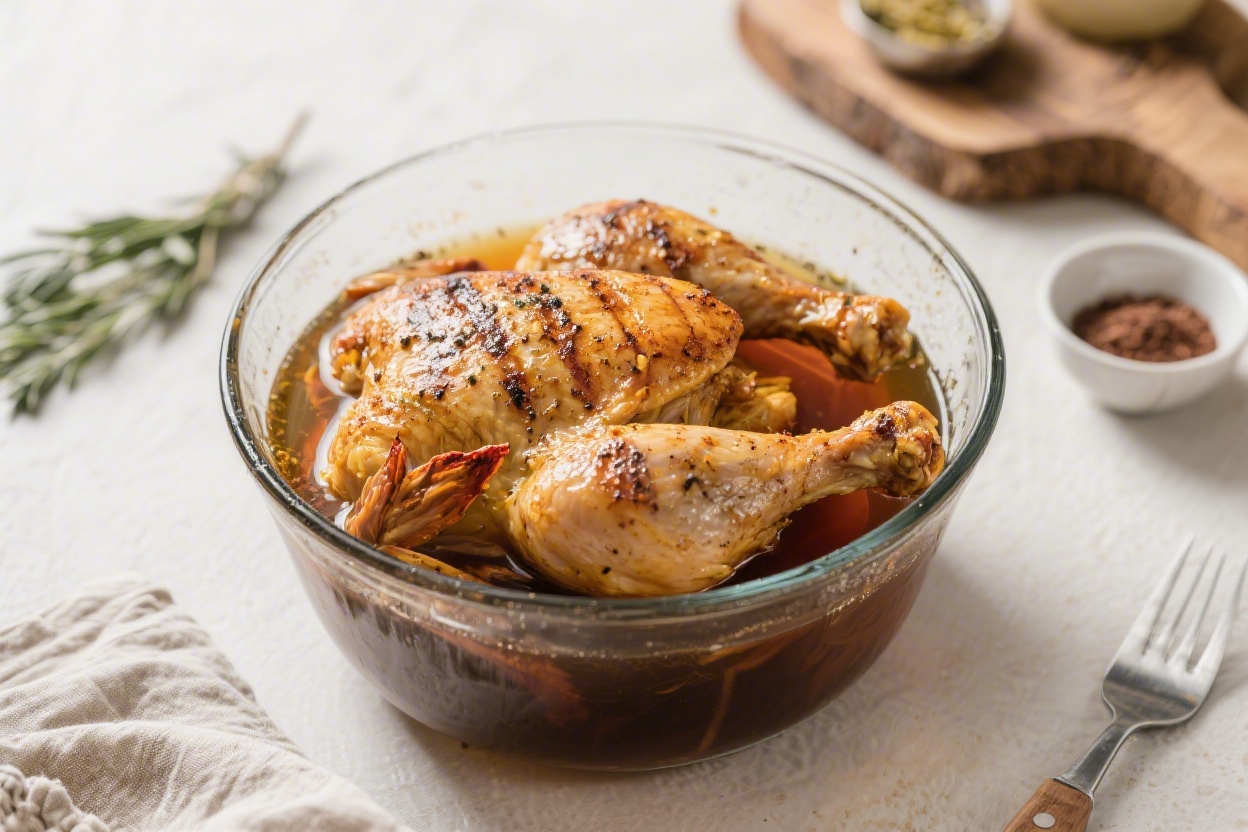
- Submerge the chicken: Place chicken in a large nonreactive container or zip-top bag. Pour in the cold brine to cover. If needed, add a bit more cold water so everything is submerged.
Weigh down with a plate if using a container.
- Brine time: Refrigerate for:
- Boneless skinless breasts: 45–90 minutes
- Bone-in pieces (thighs, drumsticks, quarters): 2–4 hours
- Whole spatchcocked chicken (3–4 lb): 4–8 hours
Do not exceed 24 hours or the texture can turn mealy.
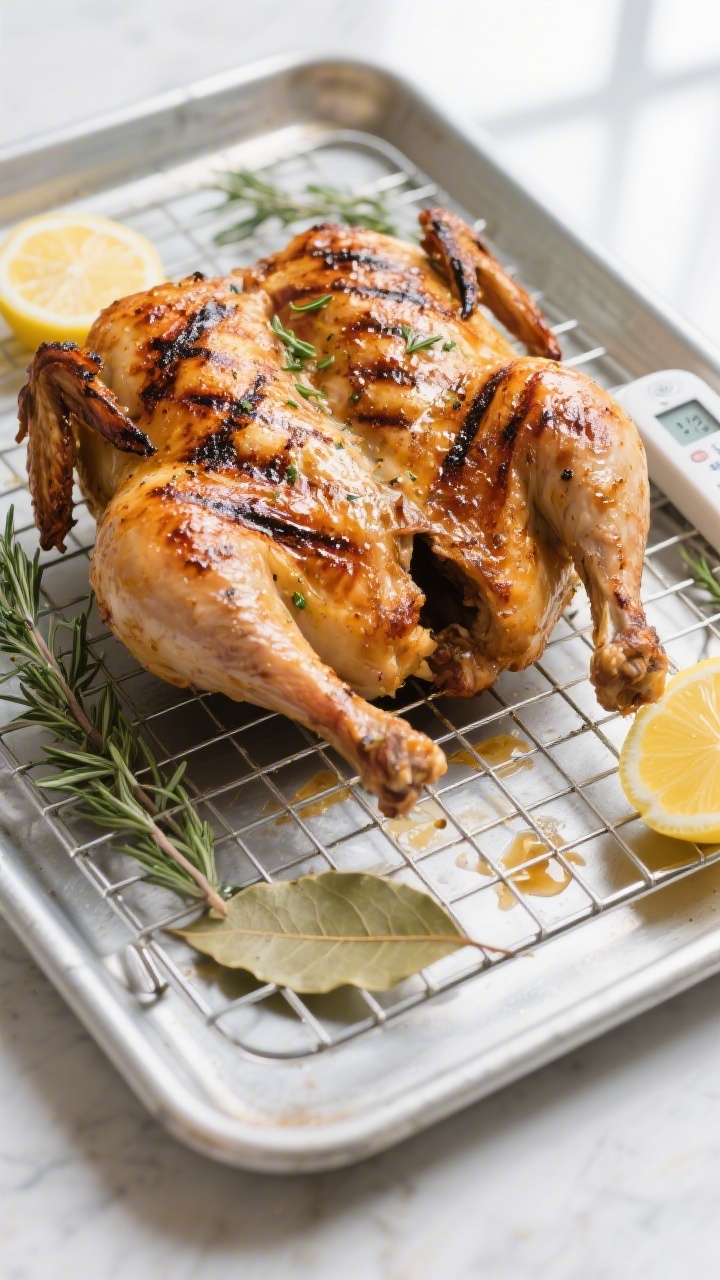
- Rinse lightly and dry: Remove chicken from the brine. Give it a quick rinse under cold water to remove surface salt and aromatics. Pat very dry with paper towels—dry skin equals better browning.
- Air-dry for crisp skin (optional but great): Set chicken on a rack over a sheet pan and refrigerate uncovered for 30–90 minutes.
This helps the skin dry out for extra-crisp grilling.
- Season simply: Because it’s brined, you only need light seasoning. A little black pepper, paprika, and a touch of oil is enough. Save salty rubs for after cooking, or use a low-salt rub.
- Grill: Preheat to medium-high.
Cook over two-zone heat—sear over direct heat to get color, then move to indirect heat to finish. Aim for:
- Breasts: 160°F internal, rest to 165°F
- Thighs/drumsticks: 175–185°F for tenderness
- Whole/spatchcocked: Thighs to 175°F; breast to 160°F
Rest 5–10 minutes before slicing.
How to Store
Use brine once, then discard. Do not save brine that has touched raw chicken.
If you want brine on hand, make the base brine without adding chicken and store it cold for up to 5 days. Chill it completely before use.
Leftover cooked chicken keeps in the fridge for 3–4 days in an airtight container. Reheat gently or slice it cold for salads and sandwiches to keep it juicy.
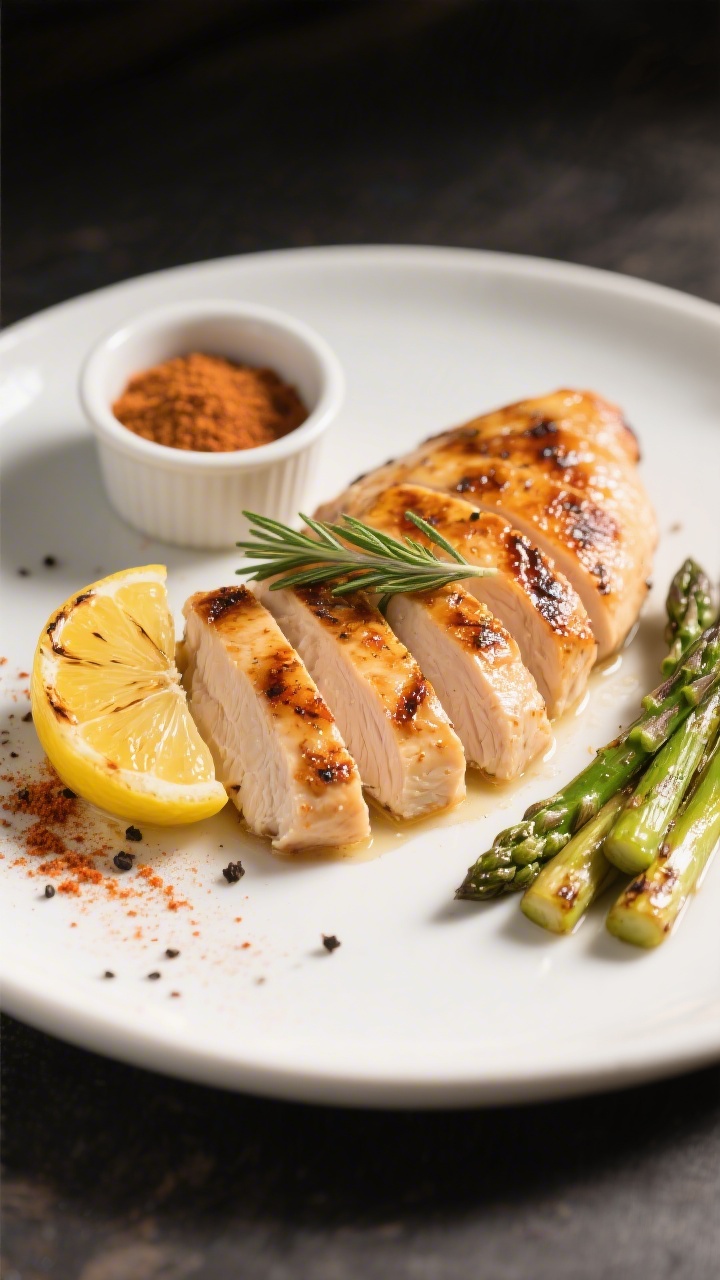
Why This is Good for You
- Moisture retention: Salt helps muscle fibers hold onto water, so the meat stays juicy even if it cooks a touch past ideal.
- Better browning: A little sugar encourages caramelization and balanced color on the grill.
- Even seasoning: The brine seasons the chicken throughout, not just on the surface.
- More forgiveness: Brined chicken is harder to dry out, which is great for weeknight grilling.
What Not to Do
- Don’t brine warm: Never add chicken to warm brine.
It must be cold to keep things safe.
- Don’t over-salt: Measure salt by type; Diamond Crystal and Morton are not interchangeable by volume.
- Don’t over-brine: Too long and the texture gets soft and hammy.
- Don’t skip drying: Wet skin steams and won’t brown well.
- Don’t reuse brine: Once it touches raw chicken, it’s done—discard it.
Recipe Variations
- Citrus-Herb Brine: Add orange slices, extra lemon, and fresh thyme. Great with grilled asparagus and rice.
- Smoky Paprika Brine: Stir in 1 teaspoon smoked paprika and a pinch of cumin. Season lightly with pepper before grilling.
- Chili-Lime Brine: Add 1 teaspoon chili flakes, lime zest, and 1 tablespoon lime juice.
Finish chicken with fresh cilantro.
- Maple & Mustard: Swap brown sugar for 2 tablespoons maple syrup and add 1 teaspoon mustard seeds. Brush with a mustard glaze at the end.
- Buttermilk Finish: After a short salt brine (45–60 minutes), pat dry and marinate in buttermilk for 2–4 hours for extra tenderness and tang.
FAQ
Can I use table salt instead of kosher salt?
Yes, but reduce the amount. Table salt is denser.
Use about 3 tablespoons table salt in place of 1/3 cup Diamond Crystal or 1/4 cup Morton kosher. When possible, weigh your salt: you’re aiming for roughly 6–7% salinity in the concentrate step before diluting to 2 quarts total liquid.
Do I have to rinse the chicken after brining?
A quick rinse helps remove excess surface salt and aromatics. Pat very dry afterward.
If you’re worried about splashing, you can skip rinsing and just wipe the surface well with damp paper towels, then dry thoroughly.
What if I only have an hour?
Focus on thinner cuts or boneless breasts. A 45–60 minute brine still makes a big difference. Keep the brine cold and don’t over-salt your post-brine seasoning.
Is sugar necessary?
No, but it helps browning and rounds out the saltiness.
If avoiding sugar, leave it out and consider a light brush of oil before grilling to help color.
Can I add soy sauce or Worcestershire?
Yes—replace part of the water with 1/4 cup soy sauce for umami, and cut back the salt slightly. Worcestershire adds depth; 1–2 teaspoons is enough. Keep total salinity in check so the chicken doesn’t turn overly salty.
What container should I use?
Use a nonreactive container—glass, stainless steel, food-safe plastic, or heavy-duty zip-top bags.
Avoid aluminum. If you’re short on fridge space, bags are efficient and keep the chicken fully submerged.
How do I prevent flare-ups on the grill?
Keep a two-zone fire. Start skin-side down over direct heat for color, then move to indirect to finish.
If flames kick up, shift to the cool side and close the lid briefly. A clean, lightly oiled grate also helps.
Can I dry brine instead?
Yes. For dry brine, sprinkle 1 to 1.25 teaspoons Diamond Crystal kosher salt per pound of chicken directly on the meat (less for Morton).
Refrigerate uncovered for 6–24 hours. Pat dry and grill. It’s less messy and gives great skin.
Wrapping Up
A dependable chicken brine makes grilled chicken juicy, flavorful, and hard to mess up.
Keep the brine cold, don’t overdo the time, and dry the chicken well before it hits the grill. From weeknight breasts to a weekend spatchcock, this simple method gives you consistent, crowd-pleasing results. Make it once, and it’ll be your go-to move every grilling season.
Ingredients
Method
- Make a quick concentrate: In a large pot, combine 2 cups hot water, 1/3 cup kosher salt (Diamond Crystal) and 3 tablespoons brown sugar. Stir until fully dissolved. If using Morton kosher salt, use 1/4 cup instead. Add peppercorns, bay leaves, garlic, and lemon slices.
- Top up with cold water and ice: Add 4 cups cold water and 2 cups ice to bring the brine to about 2 quarts total and cool it quickly. The brine should be fully cold before adding chicken.
- Submerge the chicken: Place chicken in a large nonreactive container or zip-top bag. Pour in the cold brine to cover. If needed, add a bit more cold water so everything is submerged. Weigh down with a plate if using a container.
- Brine time: Refrigerate for: Boneless skinless breasts: 45–90 minutes
- Bone-in pieces (thighs, drumsticks, quarters): 2–4 hours
- Whole spatchcocked chicken (3–4 lb): 4–8 hours
- Rinse lightly and dry: Remove chicken from the brine. Give it a quick rinse under cold water to remove surface salt and aromatics. Pat very dry with paper towels—dry skin equals better browning.
- Air-dry for crisp skin (optional but great): Set chicken on a rack over a sheet pan and refrigerate uncovered for 30–90 minutes. This helps the skin dry out for extra-crisp grilling.
- Season simply: Because it’s brined, you only need light seasoning. A little black pepper, paprika, and a touch of oil is enough. Save salty rubs for after cooking, or use a low-salt rub.
- Grill: Preheat to medium-high. Cook over two-zone heat—sear over direct heat to get color, then move to indirect heat to finish. Aim for: Breasts: 160°F internal, rest to 165°F
- Thighs/drumsticks: 175–185°F for tenderness
- Whole/spatchcocked: Thighs to 175°F; breast to 160°F
Printable Recipe Card
Want just the essential recipe details without scrolling through the article? Get our printable recipe card with just the ingredients and instructions.

Olivia is a food enthusiast who loves creating simple, delicious recipes for everyday cooking. She shares easy meal ideas, comforting dishes, and kitchen tips to help home cooks enjoy flavorful meals with confidence.