
Chicken Cacciatore Recipe – A Rustic Italian Classic Made Easy
Chicken cacciatore is cozy, bold, and deeply satisfying. Think tender chicken simmered in a rich tomato and wine sauce with peppers, mushrooms, onions, and herbs. It tastes like something you’d order at a small Italian trattoria, yet it’s simple enough for a weeknight.
The best part? It gets better as it sits, so leftovers are a joy. If you love hearty, saucy dishes that pair well with pasta, polenta, or crusty bread, this one will quickly earn a spot in your rotation.
Why This Recipe Works
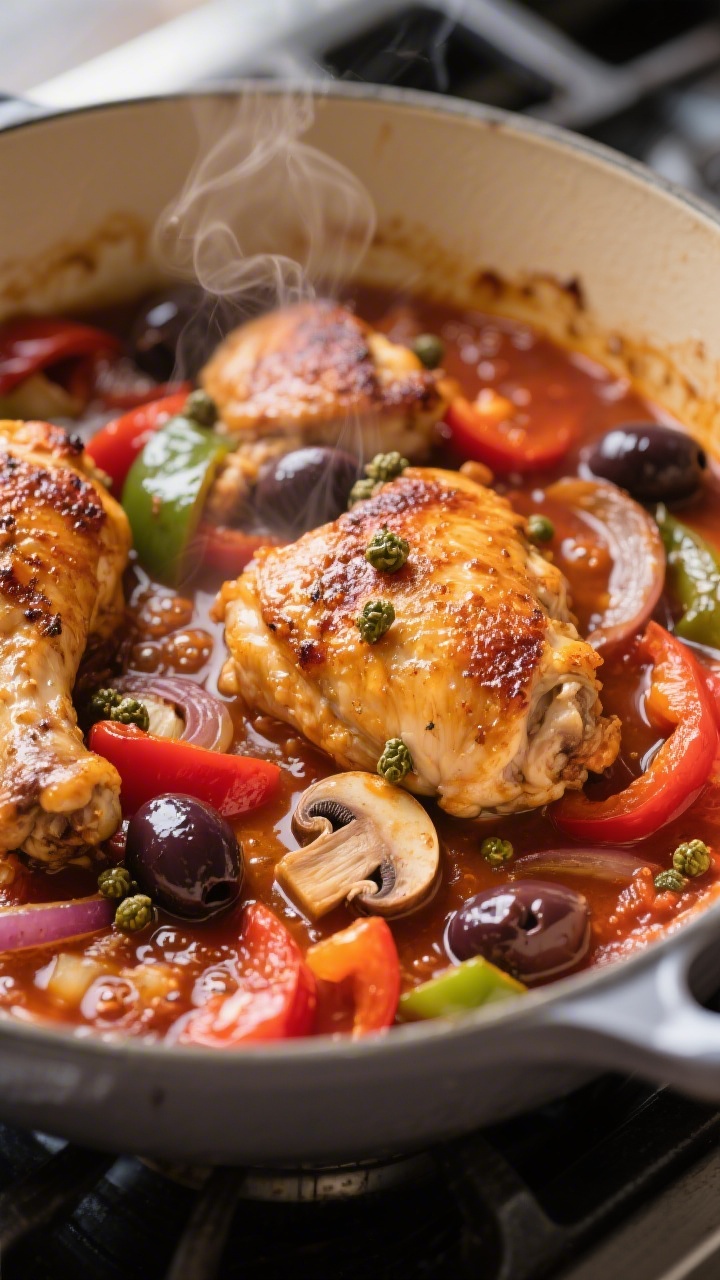
- Layered flavors: Browning the chicken first builds a savory base.
Vegetables caramelize, wine deglazes the pan, and tomatoes bring body and brightness.
- Flexible cuts: Bone-in thighs or drumsticks stay juicy, but boneless breasts or thighs work too with a few timing tweaks.
- One-pan convenience: Everything cooks in the same skillet or Dutch oven, which keeps cleanup easy and flavors concentrated.
- Make-ahead friendly: The sauce deepens in flavor after resting, so it’s perfect for meal prep or entertaining.
Ingredients
- 2–2.5 pounds chicken (bone-in thighs and/or drumsticks preferred; or boneless thighs)
- Kosher salt and black pepper, to taste
- 2 tablespoons olive oil
- 1 medium yellow onion, thinly sliced
- 1 red bell pepper, sliced
- 1 green bell pepper, sliced
- 8 ounces cremini or button mushrooms, sliced
- 4 cloves garlic, minced
- 1 teaspoon dried oregano
- 1 teaspoon dried thyme (or 1 tablespoon fresh)
- 1/2 teaspoon red pepper flakes (optional, for gentle heat)
- 1/2 cup dry red wine (Chianti or a medium-bodied red; sub chicken broth)
- 1 (28-ounce) can crushed tomatoes (or whole peeled, hand-crushed)
- 1/2 cup low-sodium chicken broth
- 2 tablespoons capers, drained
- 8–10 pitted Kalamata or black olives, halved (optional but classic)
- 1 bay leaf
- Fresh parsley, chopped, for garnish
- Optional finish: 1 tablespoon butter for gloss and richness
Step-by-Step Instructions
- Pat dry and season: Pat the chicken dry with paper towels for better browning. Season all sides generously with salt and pepper.
- Brown the chicken: Heat olive oil in a large skillet or Dutch oven over medium-high. Sear chicken skin-side down until deeply golden, 5–7 minutes.
Flip and brown the other side, 3–4 minutes. Transfer to a plate. Do this in batches if needed to avoid overcrowding.
- Soften the vegetables: Reduce heat to medium.
Add onion, peppers, and mushrooms with a pinch of salt. Cook, stirring, until softened and lightly browned, about 6–8 minutes.
- Add aromatics: Stir in garlic, oregano, thyme, and red pepper flakes. Cook until fragrant, about 30 seconds.
- Deglaze with wine: Pour in the red wine, scraping up browned bits.
Let it simmer for 2–3 minutes to reduce by about half.
- Build the sauce: Add crushed tomatoes, chicken broth, capers, olives, and bay leaf. Stir and bring to a gentle simmer. Taste and adjust salt if needed.
- Nestle in the chicken: Return the chicken and any juices to the pan, skin-side up.
Reduce heat to low so it gently bubbles. Cover and simmer 20 minutes (boneless thighs) to 30–35 minutes (bone-in), until chicken is cooked through and tender.
- Uncover to thicken: Remove the lid and simmer another 5–10 minutes to thicken the sauce. If you want a silkier finish, stir in the butter.
Remove the bay leaf.
- Taste and finish: Adjust seasoning with salt, pepper, and a pinch of sugar if the tomatoes taste too sharp. Scatter chopped parsley on top.
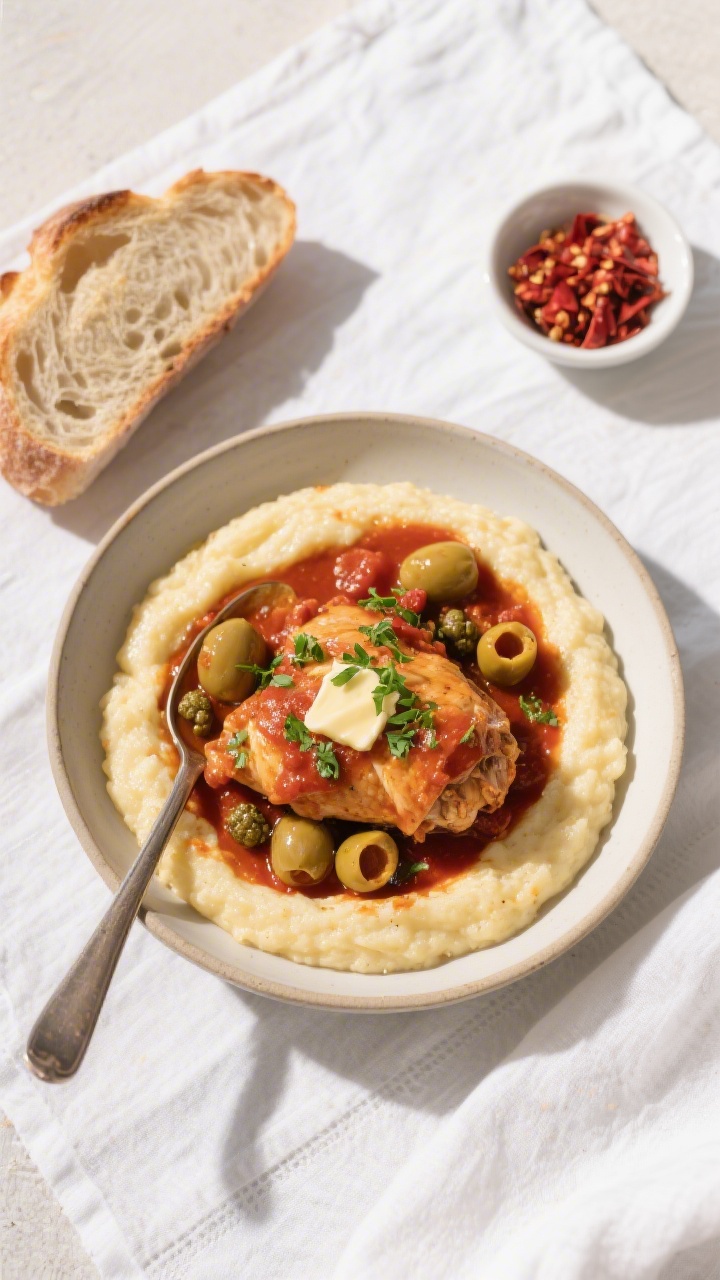
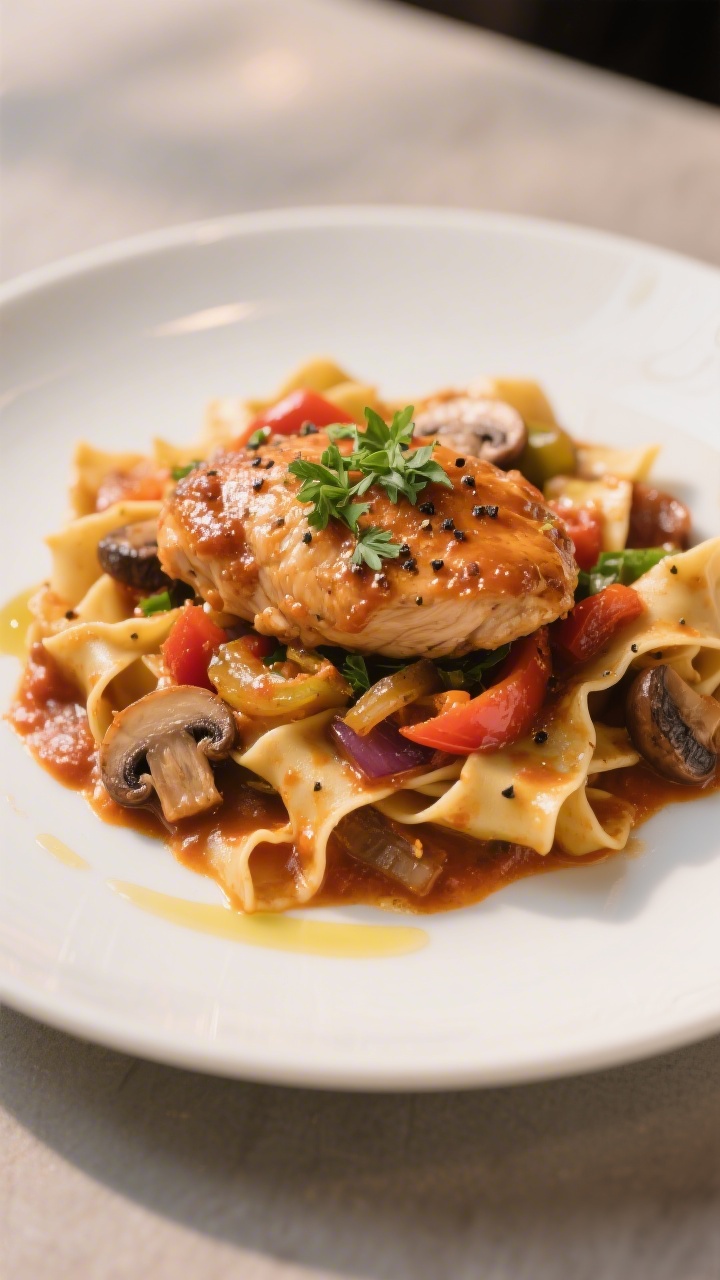
- Serve: Spoon chicken and sauce over pasta, creamy polenta, mashed potatoes, or alongside crusty bread. A simple green salad balances the richness.
How to Store
- Refrigerator: Cool completely, then store in airtight containers for up to 4 days.
The flavors meld and deepen over time.
- Freezer: Freeze in portions for up to 3 months. Thighs hold up best. Thaw overnight in the fridge.
- Reheating: Warm gently on the stovetop over low heat with a splash of water or broth to loosen the sauce.
Avoid boiling to keep the chicken tender.
Benefits of This Recipe
- Balanced nutrition: Protein-rich chicken, vegetables for fiber and vitamins, and a tomato base full of lycopene.
- Budget-friendly: Uses affordable cuts and pantry staples without sacrificing flavor.
- Scalable: Easy to double for guests or meal prep. The sauce stretches well with extra veggies.
- Versatile serving options: Works with pasta, grains, or low-carb sides like cauliflower mash.
Pitfalls to Watch Out For
- Skipping the sear: Browning adds depth. If you skip this step, the sauce can taste flat.
- Boiling instead of simmering: A hard boil toughens the meat.
Keep it at a gentle bubble.
- Undersalting: Tomatoes and peppers can mute salt. Taste at the end and adjust.
- Overcrowding the pan: Crowding steams instead of browns. Sear in batches for best flavor.
Alternatives
- Protein swap: Use boneless, skinless chicken breasts.
Sear briefly, then simmer for 12–15 minutes to avoid drying out. Pork chops also work well with similar timing.
- No wine option: Replace wine with more chicken broth plus 1 teaspoon red wine vinegar for brightness.
- Herb variations: Try rosemary and bay, or add a small sprig of fresh sage. Stir in fresh basil at the end for a lighter finish.
- Veggie add-ins: Carrots (thinly sliced), zucchini, or artichokes fit right in.
Add delicate veggies in the last 10 minutes so they don’t overcook.
- Spice it up: Increase red pepper flakes or add a pinch of Calabrian chili paste for smoky heat.
- Richer sauce: For a Northern-Italian twist, stir in a splash of cream at the end for a rosé-style sauce.
FAQ
What cut of chicken is best for cacciatore?
Bone-in, skin-on thighs are ideal because they stay juicy and bring extra flavor to the sauce. Drumsticks work similarly. If you prefer boneless thighs or breasts, just reduce the simmering time so they don’t overcook.
Can I make chicken cacciatore in the oven?
Yes.
After building the sauce on the stovetop, nestle in the chicken, cover, and bake at 350°F (175°C) for 30–40 minutes, depending on cut and size. Uncover for the last 10 minutes to thicken.
Is it okay to skip the olives and capers?
Absolutely. They add briny depth, but the dish is still delicious without them.
If you skip both, consider a small splash of red wine vinegar or a squeeze of lemon to brighten the sauce.
What should I serve with chicken cacciatore?
It’s great with spaghetti, pappardelle, polenta, mashed potatoes, or even rice. A crisp green salad or steamed green beans balances the richness.
How do I prevent the sauce from tasting too acidic?
Simmer long enough to mellow the tomatoes. If it still tastes sharp, add a pinch of sugar or a small knob of butter.
Salt also helps round out acidity.
Can I make it ahead?
Yes. It tastes even better the next day. Cool, refrigerate, then reheat gently.
Add a splash of broth if the sauce has thickened too much.
What wine should I use?
A dry, medium-bodied red like Chianti, Sangiovese, or Merlot works well. Use something you’d enjoy drinking, but it doesn’t need to be expensive.
How do I know when the chicken is done?
The internal temperature should reach 165°F (74°C) in the thickest part. The meat should be tender and juices clear.
For thighs, the meat will pull from the bone easily.
In Conclusion
This chicken cacciatore recipe brings comfort, big flavor, and Italian charm without fuss. With well-browned chicken, a savory vegetable base, and a slow-simmered tomato-wine sauce, it checks all the boxes for a reliable, crowd-pleasing dinner. Serve it over your favorite starch, garnish with fresh parsley, and enjoy how the flavors improve with time.
Keep it classic or tailor it to your pantry—either way, it’s a dependable go-to you’ll crave again and again.

Ingredients
Method
- Pat dry and season: Pat the chicken dry with paper towels for better browning. Season all sides generously with salt and pepper.
- Brown the chicken: Heat olive oil in a large skillet or Dutch oven over medium-high. Sear chicken skin-side down until deeply golden, 5–7 minutes. Flip and brown the other side, 3–4 minutes. Transfer to a plate. Do this in batches if needed to avoid overcrowding.
- Soften the vegetables: Reduce heat to medium. Add onion, peppers, and mushrooms with a pinch of salt. Cook, stirring, until softened and lightly browned, about 6–8 minutes.
- Add aromatics: Stir in garlic, oregano, thyme, and red pepper flakes. Cook until fragrant, about 30 seconds.
- Deglaze with wine: Pour in the red wine, scraping up browned bits. Let it simmer for 2–3 minutes to reduce by about half.
- Build the sauce: Add crushed tomatoes, chicken broth, capers, olives, and bay leaf. Stir and bring to a gentle simmer. Taste and adjust salt if needed.
- Nestle in the chicken: Return the chicken and any juices to the pan, skin-side up. Reduce heat to low so it gently bubbles. Cover and simmer 20 minutes (boneless thighs) to 30–35 minutes (bone-in), until chicken is cooked through and tender.
- Uncover to thicken: Remove the lid and simmer another 5–10 minutes to thicken the sauce. If you want a silkier finish, stir in the butter. Remove the bay leaf.
- Taste and finish: Adjust seasoning with salt, pepper, and a pinch of sugar if the tomatoes taste too sharp. Scatter chopped parsley on top.
- Serve: Spoon chicken and sauce over pasta, creamy polenta, mashed potatoes, or alongside crusty bread. A simple green salad balances the richness.
Printable Recipe Card
Want just the essential recipe details without scrolling through the article? Get our printable recipe card with just the ingredients and instructions.

Olivia is a food enthusiast who loves creating simple, delicious recipes for everyday cooking. She shares easy meal ideas, comforting dishes, and kitchen tips to help home cooks enjoy flavorful meals with confidence.