
Chicken Kung Pao Recipe – A Spicy, Savory Weeknight Favorite
This Chicken Kung Pao recipe brings restaurant-style flavor to your kitchen with simple steps and pantry-friendly ingredients. It’s bold, slightly sweet, and just the right amount of spicy. You’ll get juicy chicken, crunchy peanuts, and crisp veggies coated in a glossy, garlicky sauce.
Everything cooks fast in one pan, making it perfect for busy nights. If you love big flavor with little fuss, this one’s for you.
What Makes This Recipe So Good
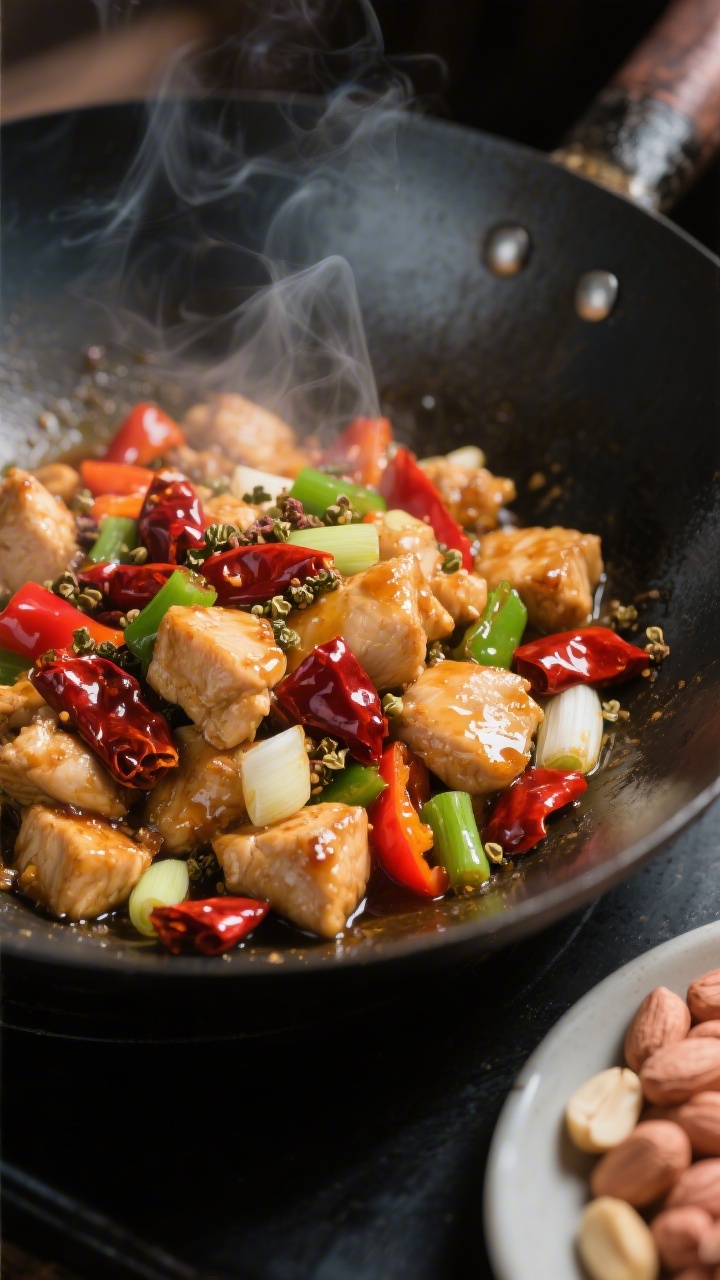
- Balanced flavor: A mix of salty soy, tangy vinegar, a hint of sweetness, and subtle heat gives classic kung pao complexity.
- Great texture: Tender chicken, crunchy peanuts, and crisp bell peppers make each bite interesting.
- Quick to cook: Once prepped, the stir-fry comes together in about 10 minutes.
- Flexible heat: Adjust the spice level with dried chilies or chili flakes to match your taste.
- Better than takeout: Fresher, lighter, and customizable with clean, simple ingredients.
Ingredients
- For the chicken:
- 1.5 pounds boneless, skinless chicken breast or thighs, cut into 3/4-inch cubes
- 1 tablespoon soy sauce
- 1 teaspoon Shaoxing wine or dry sherry (optional but recommended)
- 1 teaspoon cornstarch
- 1/2 teaspoon sesame oil
- Pinch of white pepper or black pepper
- For the sauce:
- 3 tablespoons low-sodium soy sauce
- 1 tablespoon dark soy sauce (for color; optional)
- 2 tablespoons rice vinegar or Chinese black vinegar
- 1–1.5 tablespoons sugar or honey (adjust to taste)
- 3 tablespoons water or low-sodium chicken broth
- 1–1.5 teaspoons cornstarch
- Aromatics and stir-fry:
- 2 tablespoons neutral oil (peanut, canola, or avocado oil)
- 6–8 dried red chilies (such as Tianjin or arbol), stems removed; adjust for heat
- 1 teaspoon Sichuan peppercorns, lightly crushed (optional but classic)
- 3 cloves garlic, minced
- 1 tablespoon fresh ginger, minced
- 1 red bell pepper, diced into 3/4-inch pieces
- 1 green bell pepper, diced into 3/4-inch pieces
- 4–5 scallions, white parts sliced into 1-inch pieces; green parts thinly sliced for garnish
- 2/3 cup roasted, unsalted peanuts
- To serve:
- Steamed white rice or jasmine rice
Step-by-Step Instructions
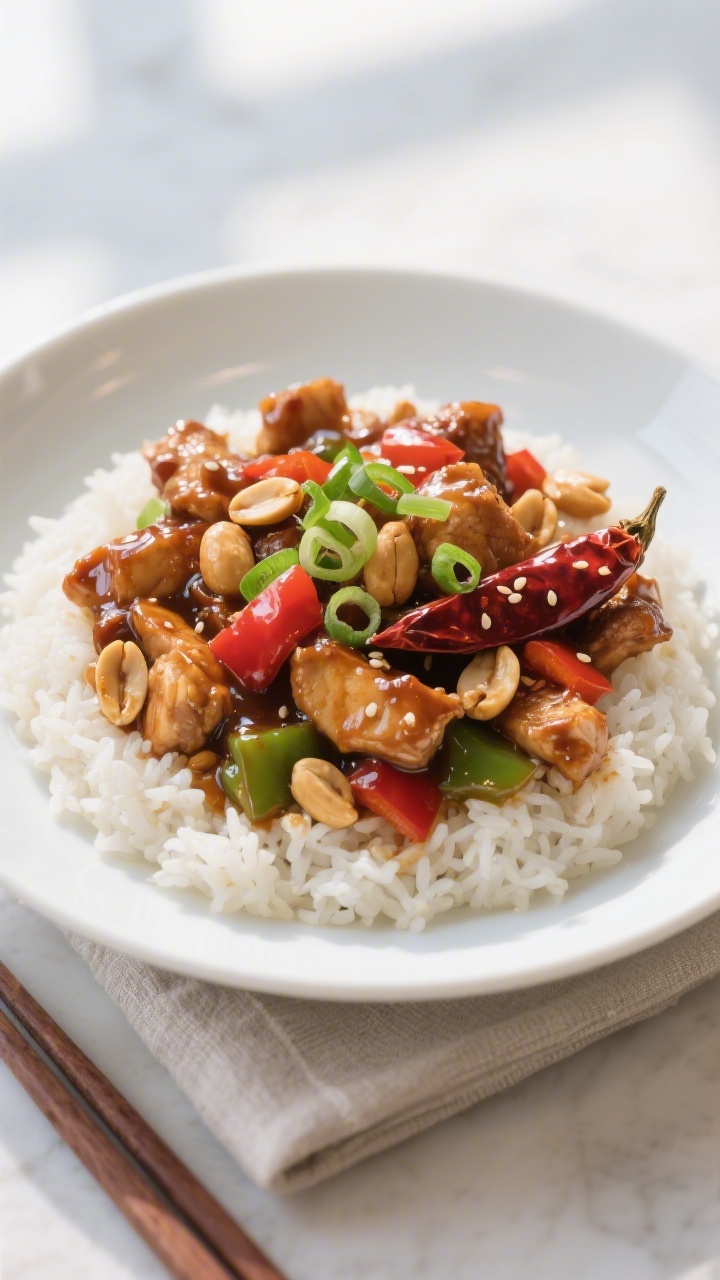
- Marinate the chicken: In a bowl, toss chicken with soy sauce, Shaoxing wine, cornstarch, sesame oil, and pepper. Let it sit for 10–15 minutes while you prep the rest.
- Make the sauce: In a small bowl, whisk soy sauce, dark soy (if using), vinegar, sugar, water or broth, and cornstarch until smooth.Taste and adjust sweetness or tang as you like.
- Prep aromatics: Mince the garlic and ginger. Slice the scallions, keeping whites and greens separate. Cut bell peppers into even pieces so they cook uniformly.
- Heat the wok or skillet: Set a large wok or heavy skillet over medium-high heat.Add 1 tablespoon oil and swirl to coat.
- Stir-fry the chicken: Add chicken in a single layer. Let it sear undisturbed for 45–60 seconds, then stir-fry until just cooked through and lightly browned, 3–4 minutes. Transfer to a plate.
- Toast the chilies and peppercorns: Add the remaining 1 tablespoon oil.Toss in dried chilies and Sichuan peppercorns. Stir-fry 20–30 seconds until fragrant, but don’t let them burn.
- Add aromatics and veggies: Add garlic, ginger, and scallion whites. Stir 20 seconds.Add bell peppers and cook 1–2 minutes until crisp-tender.
- Combine everything: Return chicken to the pan. Give the sauce a quick stir and pour it in. Stir-fry 30–60 seconds as it thickens and becomes glossy, coating the chicken and vegetables.
- Add peanuts and finish: Stir in peanuts and most of the scallion greens.Toss well. Remove from heat. Taste and adjust salt, sweetness, or vinegar if needed.
- Serve: Garnish with remaining scallion greens.Serve hot over steamed rice.
Keeping It Fresh
- Storage: Cool completely, then store in an airtight container in the fridge for up to 3 days.
- Reheating: Reheat gently in a skillet over medium heat with a splash of water to loosen the sauce. Microwave in short bursts, stirring between, to avoid overcooking the chicken.
- Make-ahead tips: Chop veggies, mix the sauce, and marinate chicken up to 12 hours ahead. Keep everything chilled separately until ready to cook.
- Freezing: Not ideal due to texture changes, but you can freeze cooked chicken separately.Add fresh veggies and sauce when reheating for better crunch.
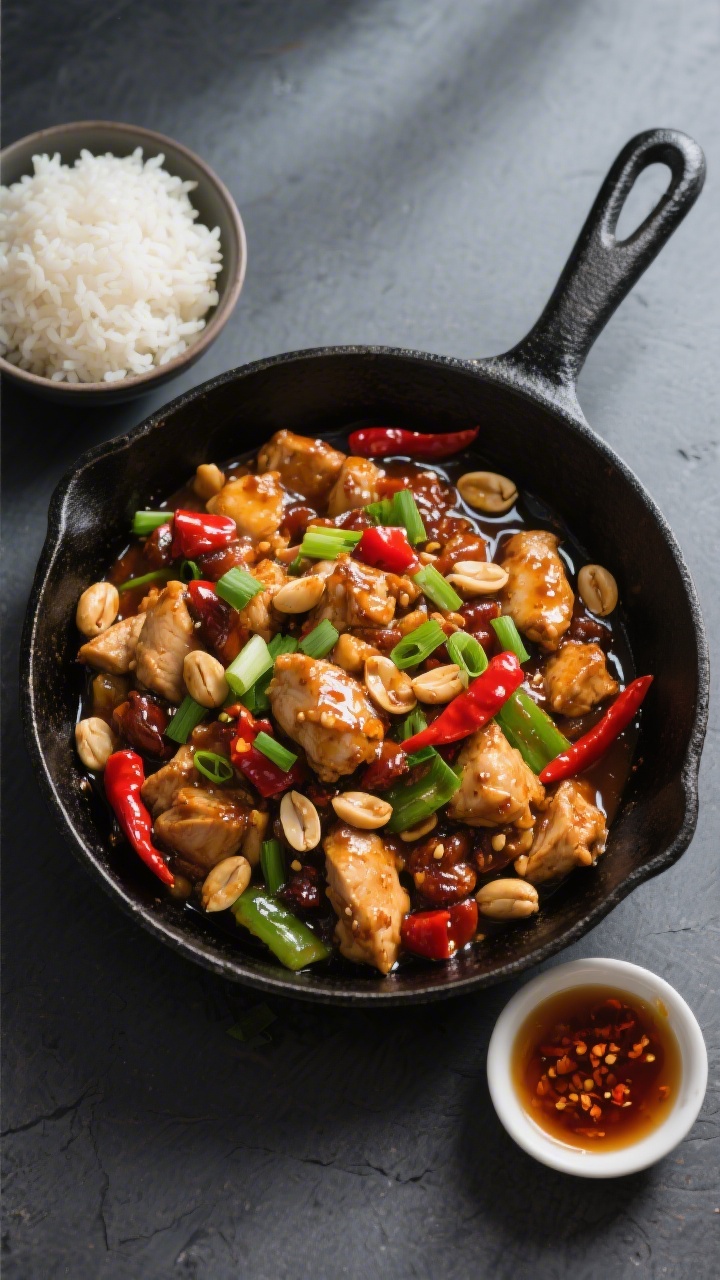
Why This is Good for You
- Lean protein: Chicken breast or thighs provide satisfying protein without being heavy.
- Healthy fats in moderation: Peanuts add crunch, flavor, and plant-based fats, along with a bit of fiber.
- Veggie boost: Bell peppers and scallions bring vitamins A and C and a pop of color and freshness.
- Customizable sodium and sugar: Using low-sodium soy and adjusting sugar lets you keep it balanced.
Pitfalls to Watch Out For
- Overcrowding the pan: This steams the chicken and makes it tough. Cook in batches if needed.
- Burning the chilies: They turn bitter fast. Keep the heat medium-high and stir constantly when toasting.
- Skipping the cornstarch: It’s key for velveting the chicken and thickening the sauce.Don’t leave it out.
- Uneven cuts: Different-sized chicken and veggie pieces cook unevenly. Aim for uniform chunks.
- Sauce too thick or thin: If too thick, add a splash of water. If too thin, simmer 30 more seconds or add a tiny cornstarch slurry.
Alternatives
- No peanuts? Use cashews or almonds.For a nut-free option, try roasted chickpeas or sunflower seeds for crunch.
- More veggies: Add zucchini, snap peas, celery, or mushrooms. Keep total volume similar so the sauce still coats well.
- Different protein: Swap chicken for shrimp, tofu, or pork. For tofu, use extra-firm, press well, and pan-fry to crisp before saucing.
- Gluten-free: Use tamari or a certified gluten-free soy sauce.Check your vinegar and other condiments too.
- Milder or hotter: Reduce or omit dried chilies for mild. For extra heat, add chili oil or a pinch of crushed red pepper.
- Lower sugar: Cut sugar to 1 teaspoon and balance with a touch more vinegar if needed.
FAQ
Can I make Chicken Kung Pao without a wok?
Yes. A large, heavy skillet works well.
Preheat it thoroughly, don’t overcrowd, and keep ingredients moving to mimic wok cooking.
What’s the difference between Kung Pao and General Tso’s?
Kung Pao is typically stir-fried with peanuts and a tangy, lightly sweet sauce, often featuring Sichuan peppercorns. General Tso’s is usually battered, deep-fried chicken in a thicker, sweeter sauce without peanuts.
Do I have to use Sichuan peppercorns?
No, but they add that signature tingly heat and citrusy aroma. If you skip them, the dish will still be delicious, just missing that classic numbing kick.
How do I keep the chicken tender?
Velveting helps: a quick marinade with soy, cornstarch, and a splash of oil.
Also, cook over high heat, avoid overcooking, and don’t crowd the pan.
Can I reduce the oil?
Yes. Use 1 to 1.5 tablespoons oil total in a nonstick pan. Just watch closely so the aromatics don’t scorch.
Is this recipe kid-friendly?
Absolutely, if you reduce or remove the dried chilies and peppercorns.
You can add heat to adult portions with chili oil at the table.
What rice goes best with this?
Steamed jasmine rice is classic. Brown rice or cauliflower rice also work if you prefer a heartier or lighter base.
Can I double the recipe?
Yes, but stir-fry in batches so the pan stays hot and the chicken sears instead of steams. Combine everything at the end with the sauce.
What if I can’t find Shaoxing wine?
Use dry sherry or skip it.
The sauce will still have great depth from soy, vinegar, garlic, and ginger.
How spicy is this?
Medium by default. Dial it down by using fewer chilies, or turn it up with extra chilies and a drizzle of chili oil at the end.
Final Thoughts
Chicken Kung Pao is the kind of meal that feels special but cooks fast. With simple prep and a balanced sauce, it delivers crunch, heat, and savory depth in every bite.
Make it your own by tweaking the spice, swapping veggies, or trying tofu or shrimp. Keep the pan hot, the cuts even, and the sauce ready, and you’ll have a better-than-takeout dinner on the table in minutes.
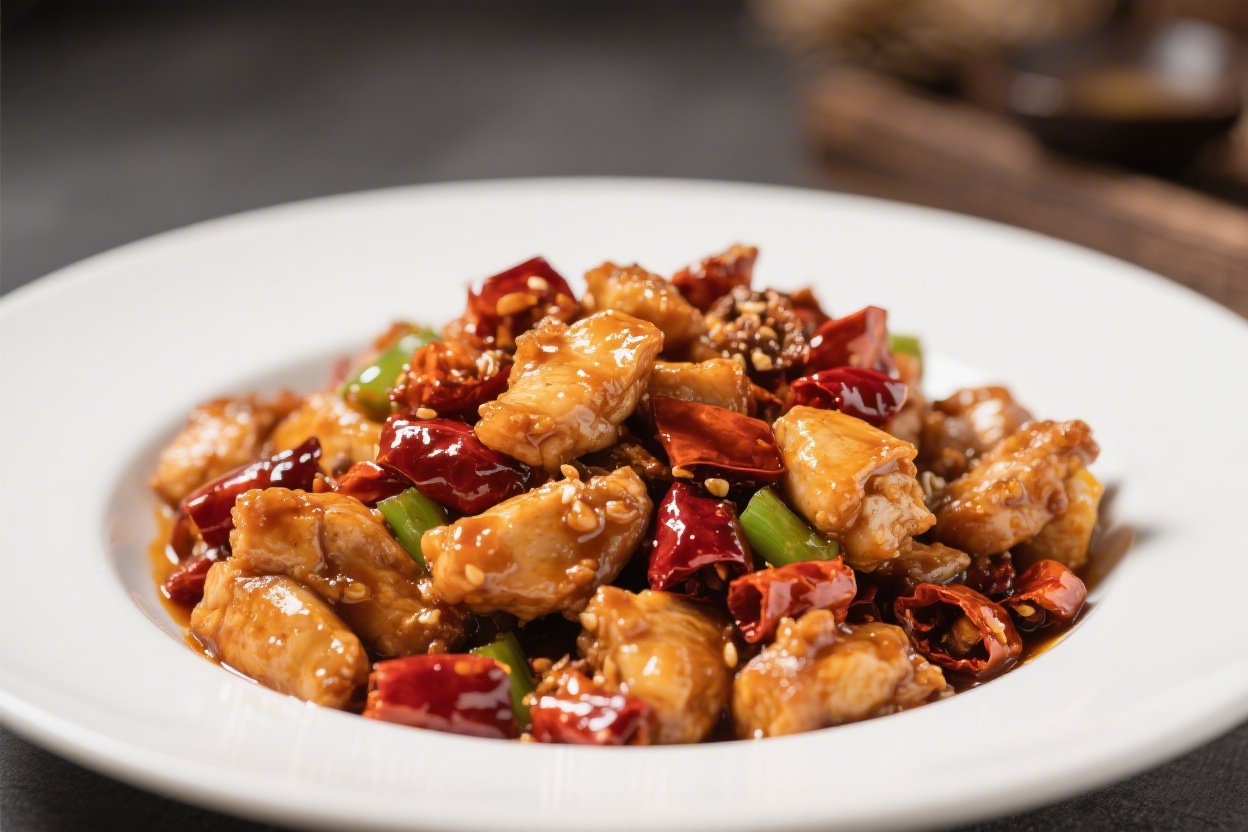
Ingredients
Method
- Marinate the chicken: In a bowl, toss chicken with soy sauce, Shaoxing wine, cornstarch, sesame oil, and pepper. Let it sit for 10–15 minutes while you prep the rest.
- Make the sauce: In a small bowl, whisk soy sauce, dark soy (if using), vinegar, sugar, water or broth, and cornstarch until smooth. Taste and adjust sweetness or tang as you like.
- Prep aromatics: Mince the garlic and ginger. Slice the scallions, keeping whites and greens separate. Cut bell peppers into even pieces so they cook uniformly.
- Heat the wok or skillet: Set a large wok or heavy skillet over medium-high heat. Add 1 tablespoon oil and swirl to coat.
- Stir-fry the chicken: Add chicken in a single layer. Let it sear undisturbed for 45–60 seconds, then stir-fry until just cooked through and lightly browned, 3–4 minutes. Transfer to a plate.
- Toast the chilies and peppercorns: Add the remaining 1 tablespoon oil. Toss in dried chilies and Sichuan peppercorns. Stir-fry 20–30 seconds until fragrant, but don’t let them burn.
- Add aromatics and veggies: Add garlic, ginger, and scallion whites. Stir 20 seconds. Add bell peppers and cook 1–2 minutes until crisp-tender.
- Combine everything: Return chicken to the pan. Give the sauce a quick stir and pour it in. Stir-fry 30–60 seconds as it thickens and becomes glossy, coating the chicken and vegetables.
- Add peanuts and finish: Stir in peanuts and most of the scallion greens. Toss well. Remove from heat. Taste and adjust salt, sweetness, or vinegar if needed.
- Serve: Garnish with remaining scallion greens. Serve hot over steamed rice.
Printable Recipe Card
Want just the essential recipe details without scrolling through the article? Get our printable recipe card with just the ingredients and instructions.
Olivia is a food enthusiast who loves creating simple, delicious recipes for everyday cooking. She shares easy meal ideas, comforting dishes, and kitchen tips to help home cooks enjoy flavorful meals with confidence.